If you are shopping for waterfront property in Lighthouse Point, the view is only part of the story. In this city, the way a lot sits on the water, the kind of canal access it offers, and what the dock can legally support may matter just as much as the home itself. Understanding those details early can help you narrow your search, ask better questions on tour, and avoid costly surprises later. Let’s dive in.
Why Lighthouse Point Feels Different
Lighthouse Point is a mostly built-out waterfront city with a distinct layout. According to city information, about 80% of residences are single-family homes, and many sit along 18 miles of waterways. The canal system is man-made and bulkheaded, and the Intracoastal Waterway runs the full length of the city with several connections into the canal network.
That gives the city a very specific waterfront identity. This is not a beachfront market shaped by natural bays or rivers. It is a boating-oriented market where engineered water access, seawalls, dock design, and navigation details play a major role in how each property functions.
The street pattern also affects the feel of the inventory. The city notes that streets wind and twist and include many cul-de-sacs, so waterfront lots often feel more varied than a standard grid would suggest. In practical terms, you may see big differences in turning room, water exposure, and privacy from one block to the next.
Main Waterfront Home Styles
Straight canal-front homes
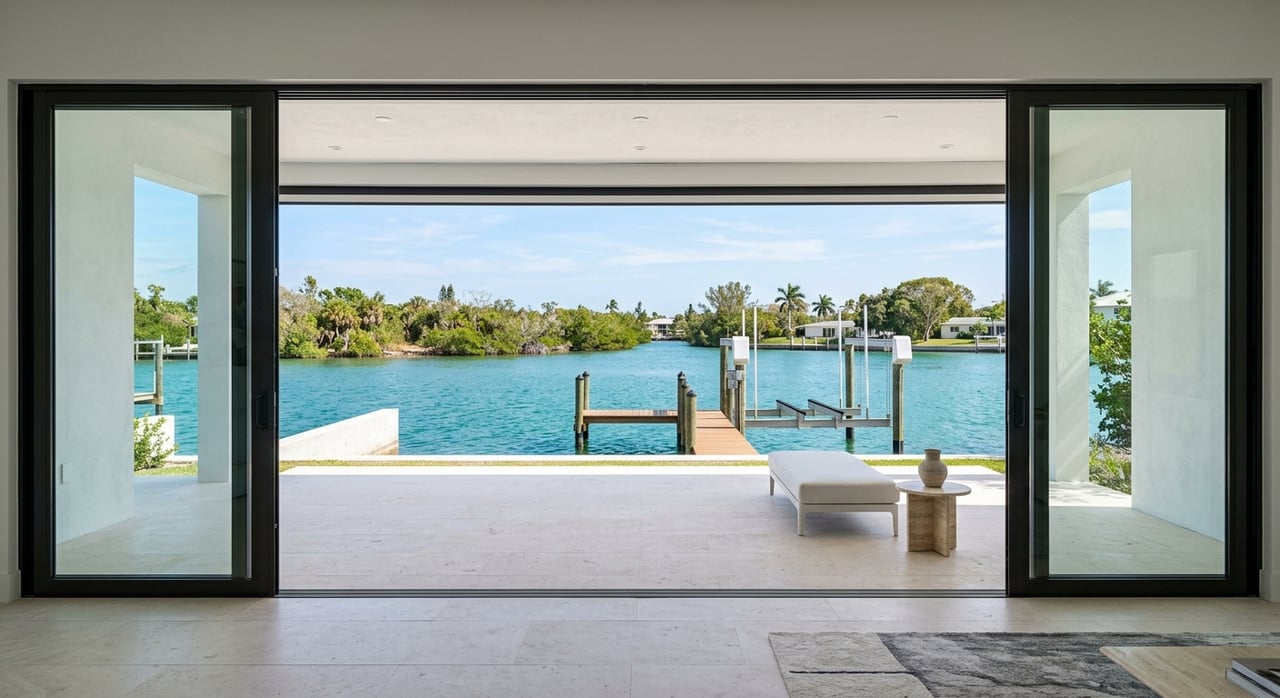
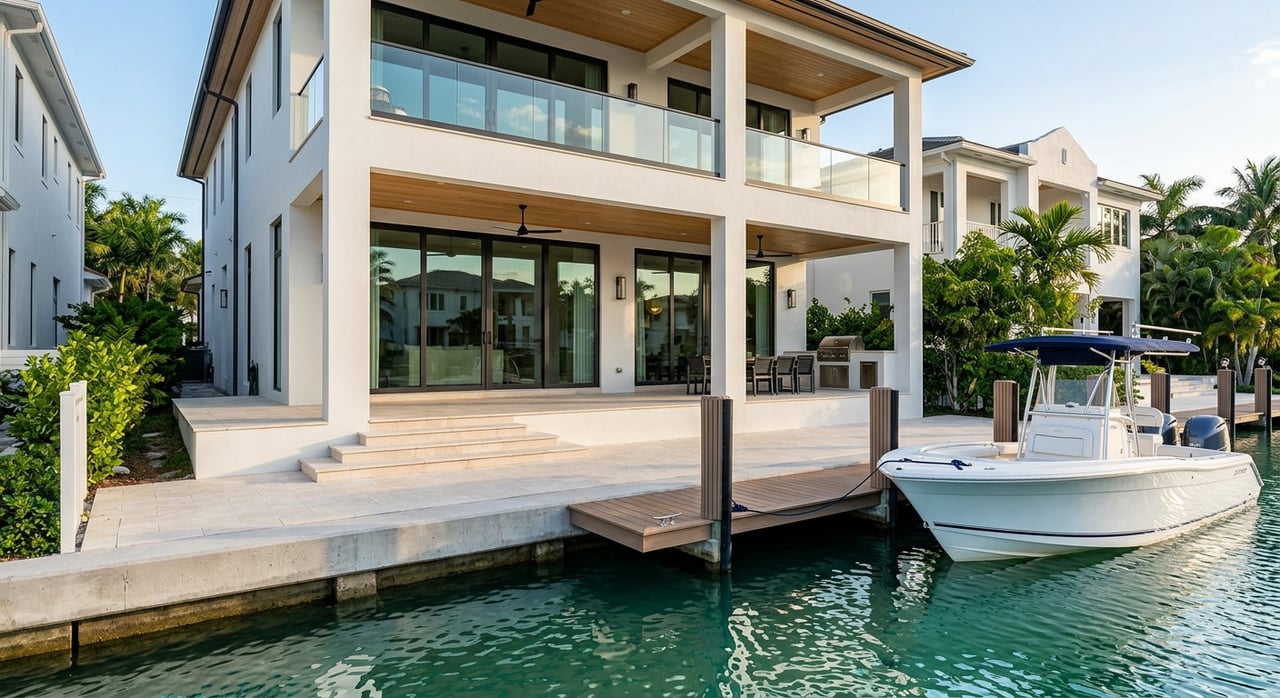
Straight canal-front homes are one of the most common waterfront options you will find in Lighthouse Point. These properties typically feature a seawall and some type of dock configuration, and the city’s dock rules are clearly written with canal-front living in mind.
For many buyers, this is the classic local choice. You get boating access and a true waterfront setting, often with a more sheltered environment than homes directly on the Intracoastal. If you want practical day-to-day dock use without the exposure of heavier boat traffic, this style often stands out.
Point lots and corner-water lots
Because of the city’s winding streets and cul-de-sac layout, point lots and corner-water lots can offer wider water views and more open maneuvering space. While this is not a formal zoning category, it is a meaningful difference when you compare waterfront homes in person.
If you boat regularly, this kind of lot can be especially appealing. Extra water frontage may improve docking flexibility and can make turns easier, depending on canal geometry. It can also create a more dramatic visual setting from the rear of the home.
Intracoastal-front and inlet-adjacent homes
Homes on or near the Intracoastal Waterway or close to Hillsboro Inlet usually offer the most direct route toward open water. The city describes the east side of Lighthouse Point as opening to the Intracoastal and the Hillsboro Inlet area, under the presence of the Hillsboro Lighthouse.
These properties can be highly attractive for serious boaters, but they come with tradeoffs. You are closer to busier marine traffic, and bridge clearance becomes a much more important factor. For some buyers, that direct access is worth it. For others, a calmer canal-front setting may be a better fit.
Bridge-served island pockets
A smaller but important part of the local market is the bridge-served island pocket. City infrastructure information identifies areas where a bridge provides the only access, including the Lake Placid community via the Sample Road Bridge and a 25-lot residential island via the NE 31st Court Bridge.
These settings can feel more tucked away than a standard canal street. If you value a quieter approach and a more enclosed residential setting, they may be appealing. At the same time, every trip in and out depends on that bridge access, which is worth keeping in mind during your search.
What Dock Options Buyers Should Know
In Lighthouse Point, dock size is not simply a design choice. The city regulates what can be built based on the width of the waterway and how far the structure extends from the seawall or property line.
According to the city ordinance, a dock on a canal or waterway is generally capped at 8 feet from the landward side of the seawall cap or property line, whichever is closer to the water. The city allows up to 10 feet only where the canal or waterway is at least 100 feet wide.
Dock width is also regulated. On canals under 100 feet wide, dock width is limited to 6 feet. On canals 100 feet wide or greater, dock width can be up to 8 feet.
The city also defines a landing wharf as a floating dock attached to a seawall or dock and no wider than 8 feet. That tells you something important about the local waterfront style. In general, the city favors compact, orderly marine improvements rather than oversized platforms that dominate the canal edge.
Canal Navigation Matters Too
Dock rules are only part of the picture. The city code also works to preserve canal navigability by maintaining an access channel of about 26 feet along the centerline of waterways, and rafting is prohibited in many situations except for limited temporary use.
For you as a buyer, that means Lighthouse Point is designed to keep canals functional. It is not a market where side-by-side mooring can simply expand without limits. If your boating plans include a larger vessel or frequent dockside activity, it is smart to think about how the lot, dock, and canal width work together.
Permits and Approvals for Dock Work
If you are planning dock work after closing, expect a formal process. The city’s dock and seawall checklist calls for outside-agency approvals from Broward County, the Florida Department of Environmental Protection, or the Army Corps of Engineers when required.
The city also requires signed and sealed plans in certain cases, along with an updated dock and seawall survey before final inspection. Its FAQ states that dock permits require a survey, and if the survey is more than 12 months old, a zoning affidavit may also be required.
That means a waterfront purchase should include more than a casual look at the dock. You will want to review what is already permitted, whether the current structure appears to match available records, and what would be involved if you wanted to modify it.
Bridge Clearances Can Make Or Break A Fit
For many waterfront buyers in Lighthouse Point, the biggest question is not the dock. It is the route out.
NOAA’s Coast Pilot states that the A1A bridge at Hillsboro Inlet has a 13-foot clearance. It also notes that current past the bridge can reach 5 to 6 knots on the flood tide and warns that shoaling south of Hillsboro Inlet is rapid.
If your boat has a tower, radar arch, or taller profile, bridge height may be the first filter in your search. A beautiful home with a legal dock may still be the wrong match if your boat cannot move comfortably through the route you need.
South of Hillsboro Inlet, NOAA lists several Intracoastal bridge clearances, including:
- 21 feet at the SR 810 Deerfield Beach bridge
- 15 feet at NE 14th Street
- 15 feet at Atlantic Boulevard
- 15 feet at Commercial Boulevard
- 22 feet at Oakland Park Beach Boulevard
- 25 feet at Sunrise Boulevard
- 24 feet at Las Olas Boulevard
This is why air draft should be part of every serious waterfront conversation. A property may look yacht-friendly in photos, but the real test is whether your vessel can clear the bridges on your expected route.
Seawalls, Depth, And Flood Questions
A waterfront showing in Lighthouse Point should include more than the kitchen and pool. The condition of the seawall, recent canal conditions, and flood-related documentation all deserve attention.
The city has recently mobilized canal dredging work and is also performing seawall erosion repairs at selected locations. That is a useful reminder that depth and seawall condition are current, property-specific issues. You should not assume either one based on listing photos alone.
The city also states that Lighthouse Point is flood-prone, provides elevation certificates on request, and is in a mandatory evacuation area for Category 3 and above storms. For buyers, that means flood readiness and documentation are part of normal due diligence, not a side note.
If you are considering a teardown, major addition, or large remodel on a waterfront site, the city also requires signed and sealed engineer letters confirming seawall condition and its ability to support added upland improvements. That can be a major planning detail for buyers who see renovation potential.
A Smart Tour Checklist For Buyers
When you tour waterfront homes in Lighthouse Point, it helps to look beyond finishes and focus on function. The most successful buyers usually compare the home, the lot, and the boating setup as one package.
Here are a few useful questions to bring with you:
- Is the home on a straight canal, a point lot, the Intracoastal, or a bridge-served pocket?
- How wide is the canal or waterway behind the property?
- What are the current dock dimensions, and do they appear consistent with city rules?
- Is there a current survey for the dock and seawall?
- What is the seawall condition?
- What bridge clearances affect the likely route to open water?
- Are elevation information and flood documents available?
- If you plan improvements, what permits and outside approvals may be required?
These questions can help you compare properties more clearly. In Lighthouse Point, two homes with the same price and similar square footage can offer very different waterfront utility.
Choosing The Right Waterfront Match
The best home style in Lighthouse Point depends on how you plan to use the property. If you want classic canal living with practical boating access, a straight canal-front home may check the right boxes. If you want broader water exposure and potentially easier maneuvering, a point or corner-water lot may deserve extra attention.
If direct access is the priority, Intracoastal-front or inlet-adjacent homes may be worth the added complexity. If privacy and a tucked-away setting matter most, a bridge-served island pocket may be the right fit. The key is to match the lot geometry, dock setup, and navigation realities to the way you actually live.
When you are evaluating waterfront property, details matter. The right guidance can help you move beyond the view and identify the homes that truly fit your boating goals, renovation plans, and long-term lifestyle. If you want expert help comparing waterfront opportunities across South Florida, connect with The Bernal and Hudson Team for tailored, concierge-level guidance.
FAQs
What waterfront home styles are most common in Lighthouse Point?
- Buyers in Lighthouse Point will commonly find straight canal-front homes, point lots and corner-water lots, Intracoastal-front or inlet-adjacent homes, and smaller bridge-served island pockets.
What dock sizes does Lighthouse Point allow on waterfront homes?
- The city generally caps docks at 8 feet out from the seawall cap or property line, with up to 10 feet allowed on waterways at least 100 feet wide; dock width is limited to 6 feet on canals under 100 feet wide and 8 feet on waterways 100 feet wide or greater.
Why do bridge clearances matter for Lighthouse Point waterfront buyers?
- Bridge clearances can determine whether your boat can actually reach open water, especially if it has a tower, radar arch, or taller air draft.
What should buyers check about a Lighthouse Point seawall or dock?
- You should review the dock dimensions, available surveys, permit history, seawall condition, and whether any updates or repairs may require city and outside-agency approvals.
Is Lighthouse Point a natural waterfront area or a canal-based waterfront city?
- Lighthouse Point’s waterfront character is primarily based on man-made canals, the Intracoastal Waterway, and the inlet edge rather than natural beaches, rivers, bays, or lakes.
What flood-related details should buyers review for Lighthouse Point homes?
- Buyers should ask for flood documentation, review elevation information when available, and understand that the city identifies Lighthouse Point as flood-prone and in a mandatory evacuation area for Category 3 and above storms.