Every evening the beam from the Hillsboro Inlet Lighthouse sweeps across balconies from the north end of Hillsboro Mile down past the inlet, the same rotation it has run since the tower was first lit in 1907. Most people who live along that three-mile stretch of A1A can tell you which room in their unit catches the light best. Very few of them have ever stood at the base of the tower itself.
That gap between watching a landmark and reaching it is the actual story of the lighthouse, and it explains more about how this stretch of coast works than the postcard version ever does.
You Cannot Drive There, and You Cannot Just Show Up
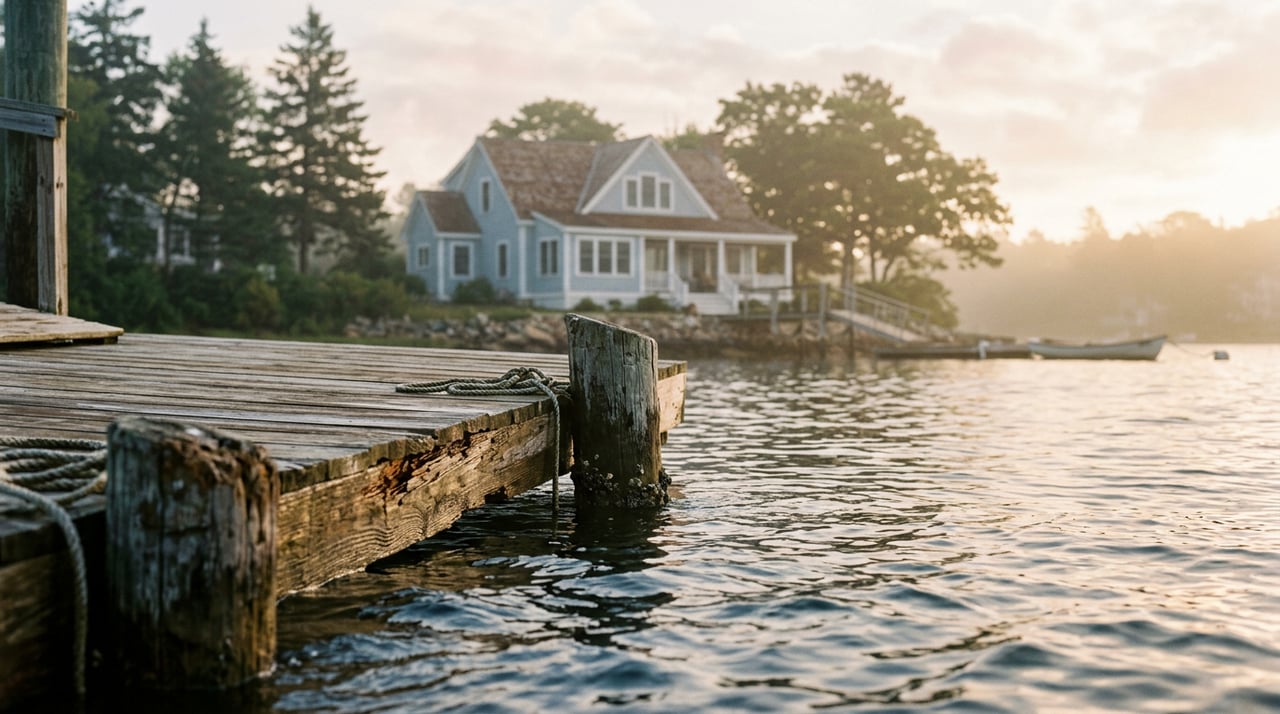
The lighthouse sits on Coast Guard property with no road access. The only way in is a boat, and the boat only runs once a month, and a seat on that boat requires joining the Hillsboro Lighthouse Preservation Society, the all-volunteer nonprofit that has stewarded the site since 1997. This isn't a park with posted hours. It's a working aid to navigation that happens to open its grounds to the public through one small organization's calendar.
On tour day, boats depart on the hour from the marina docks and return from the lighthouse's own Coast Guard dock on the half hour, which means the actual visit is short and the math around arrival matters. Seating is first-come, first-served, and the HLPS recommends showing up fifteen to twenty minutes before your boat to be sure of a spot. Miss the window and you wait for next month.
Once you're on the grounds, the climb is real: 175 steps up a spiral staircase to reach the lantern room, where the original Fresnel lens has been restored and reactivated. It's a nine-foot-wide clamshell lens weighing roughly 3,500 pounds, assembled from 356 individual pieces of glass, and it's one of the few Fresnel lenses in the country still actively rotating rather than sitting behind glass in a museum case. The tower's paint job is functional rather than decorative: the bottom third is white to stand out against the tree line, the top two-thirds and the lantern room are black to read against the sky, a daytime visual cue for sailors that predates any GPS chart.
The lens used to float on a bath of liquid mercury so keepers could rotate several tons of glass by hand. Hurricanes caused spills, and years of exposure gave more than one keeper mercury poisoning, which is why the mechanism was eventually swapped for a ball-bearing system. It's a detail that rarely makes it into the marketing copy for the tower, but it says something about how long people have been quietly solving hard problems on this exact spot of sand.
If you want the mechanics for yourself, the Hillsboro Lighthouse Preservation Society posts current tour dates and membership details on its own site.
The View That Doesn't Require a Boat or a Roster
Here's the part that gets left out of most write-ups: you don't actually need a ticket to see the lighthouse up close. Roy L. Rogers Family Park sits directly across the inlet and offers a clear, free, unticketed view of the tower along with the HLPS museum, which is open daily from 10 a.m. to 3 p.m. no membership required. It's a modest waterside park, easy to treat as an afterthought, but it's the one piece of this landmark that operates on normal public hours instead of a volunteer roster and a boat schedule.
The contrast is worth sitting with. One side of the inlet requires a nonprofit membership card and a once-a-month reservation. The other side is open every day to anyone who walks up. Both are technically "public access" to the same lighthouse. They are not remotely the same experience.
The Restaurant the Lighthouse Family Built
The lighthouse's private, gated feel isn't an isolated quirk. It's part of a pattern along this inlet, and the clearest example sits just south, across the water in Lighthouse Point.
Cap's Place, the oldest restaurant in Broward County and the oldest structure in the City of Lighthouse Point, opened in 1928 as a rum-running speakeasy called Club Unique. Its founder, Cap Knight, came from a family of lighthouse keepers, and his brother Tom was the keeper at Hillsboro at the time. The restaurant has never had a parking lot for regular guests. Then, as now, you park at a marina, board a launch, and cross open water to reach a set of wood-frame buildings that have been serving fresh seafood since before the Great Depression reached the rest of the country. It was added to the National Register of Historic Places in 1990, and its guest list over the decades has reportedly included Franklin Roosevelt, Winston Churchill, and John F. Kennedy, alongside a run of Prohibition-era names.
Two of the most storied landmarks on this stretch of coast, the lighthouse and the restaurant built by the lighthouse keeper's own family, share the same access rule: no road gets you there. You go by water, on someone else's schedule, or you don't go at all.
The Same Logic Shows Up on the Sand
The pattern extends to something far more mundane and far more likely to affect a resident directly: walking a dog on the beach.
Hillsboro Beach's town ordinance draws a hard line at the mean high water mark, also called the erosion control line. Seaward of that line is public beach, and dogs aren't allowed there at all. Landward of it, on the private portion of the beach that runs up to a residence, dogs are permitted, but only according to that specific building or property's own rules. The town's own materials acknowledge the confusion this creates, since neighboring properties along the same stretch of sand can set different policies for the same type of private frontage.
In other words, the boundary that decides whether your dog can be on "your" beach isn't set once by the town and left alone. It's set property by property, the same way access to the lighthouse isn't set by a government agency but by one small nonprofit's monthly calendar, and access to Cap's Place isn't set by a public road but by a private launch. Look closely at Hillsboro Beach and the water, the sand, and the landmarks all run on the same logic: visible to everyone, governed by whoever happens to hold the key.
Why This Is Worth Knowing If You Already Live Here
None of this changes property values or shows up on a listing sheet. It's the kind of local mechanic you only pick up by asking the right questions or, in this case, by tracing how three different landmarks along one small inlet all ended up gated in nearly identical ways.
If you've lived on Hillsboro Mile for years and never actually climbed the tower you can see from your terrace, the fix is simple: check the HLPS site for the next tour date, join, and show up early enough to get a seat on the boat. If a boat ride and a waitlist aren't your speed this month, Roy L. Rogers Family Park is sitting right there across the inlet, open every day, no membership card required.
Bernal & Hudson works this stretch of coast, from the Hillsboro Mile to Highland Beach and the corridors in between, and we spend as much time tracking the small, unwritten rules of a neighborhood as we do the market itself. If you're weighing a move along this part of the coast, or you just want a clearer read on how a specific address here actually works day to day, reach out to Bernal & Hudson and get access to our private listings before they're anywhere else.
This article is general information, not legal, tax or financial advice. Consult a qualified professional about your situation.