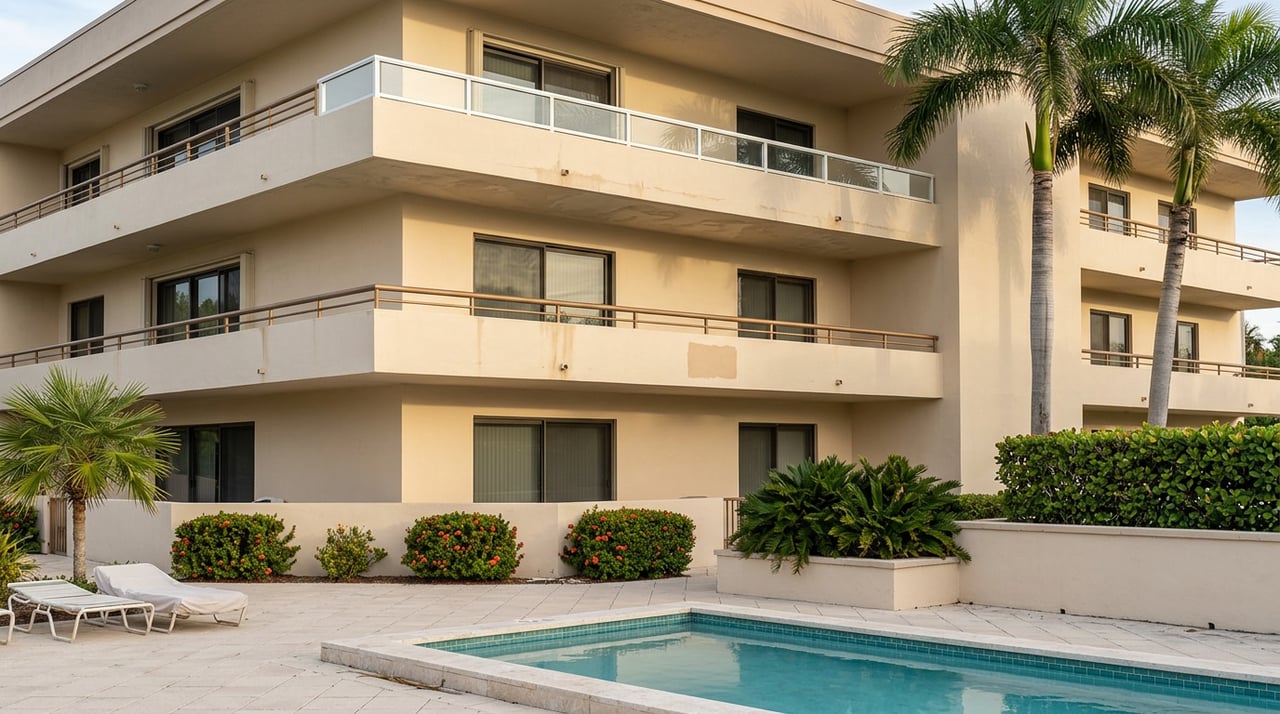
A buyer walks into a resale condo along A1A this fall with what feels like a complete file. The milestone inspection is done. The Structural Integrity Reserve Study is on record. The board minutes show no open litigation. By every measure a careful shopper has been taught to check, the building looks clean.
Then the loan gets flagged.
The reason has nothing to do with concrete, corrosion, or the age of the roof. It has to do with how the association chose to fund its reserves, a decision most buyers never think to ask about. As of August 3, 2026, the FPAT article on Fannie Mae condo reserves says that is no longer good enough for a loan Fannie Mae will buy. Two rulebooks. Two different bars. And in Boca Raton, where the housing stock skews older east of I-95, the gap between them is where deals are starting to stall right now.
The Deadline Everyone Is Watching, and the One Nobody Mentioned
Most of the coverage of Florida's post-Surfside condo reforms centers on one date: December 31, 2026. The Florida condominium FAQ identifies that as the outside deadline for a Structural Integrity Reserve Study when an association bundles it with a milestone inspection also due that year. Missing it can have consequences for buildings that ignore the notice entirely.
That deadline is real and it is close. But it is not the one that changes whether your buyer can actually close.
For a Boca Raton board that chose baseline funding in 2025, August 3, 2026 was the date their building stopped meeting Fannie Mae's reserve-funding standard for loans it will buy. Not because anything failed, but because the funding method the state allowed no longer meets that standard.
Why East Boca Ages Faster Than West Boca
Boca Raton's condo stock is not uniform, and the split matters more than most buyers realize. The city carries one of the highest concentrations of aging condominium towers in Palm Beach County, much of it built during the development booms of the 1970s, 1980s, and 1990s. A large share of that inventory sits in the three-mile coastal band. The Building Mavens guide explains why a building's certificate of occupancy date, not its neighborhood reputation, is the number worth pulling from the Palm Beach County Property Appraiser before you assume anything about timing.
What is consistent across sources is the mechanism, not just the trigger age. Buildings in East Boca, along A1A, and near the Boca Raton Inlet face chloride-induced corrosion of reinforcing steel, the leading cause of structural deterioration in South Florida concrete construction. Salt-laden air works on rebar continuously, and a building fifteen years past its coastal peers inland can be carrying meaningfully more concrete deterioration for its age. That is the physical reason the 1980s and 1990s construction boom is now surfacing simultaneously as a wave of overdue inspections rather than a trickle.
| East of I-95 / A1A corridor | West Boca inland stock | |
|---|---|---|
| Salt exposure | High, chloride corrosion accelerates aging | Lower, slower deterioration |
| Construction era concentration | Heavy 1970s-1990s boom inventory | More mixed, includes newer builds |
| Assessment exposure | Higher risk of concrete restoration costs | Generally lower near-term risk |
None of this means an oceanfront unit is a bad buy. It means the diligence checklist for a 1985 tower two blocks from the Inlet should look different than the one for a newer building west of the highway, and most generic condo-buying guides do not draw that line.
The Number That Actually Predicts a Special Assessment
Ask whether a building has a SIRS on file and you will almost always get a yes by now. That question has stopped being useful. The one that matters is the percent funded figure the study produces for each major component.
A SIRS that shows the roof with three years of remaining life and 15 percent of the required reserve saved is not a paperwork problem. It is a special assessment with a due date attached. Buildings running near 70 percent funded across their line items are in reasonable shape. Buildings well below that, especially on big-ticket items like roofing, waterproofing, or structural concrete, are the ones generating the assessments now landing between $10,000 and well over $100,000 per unit across South Florida.
A statewide review released by the Florida Legislature's watchdog office on August 1, 2026 gives a sense of how much of this backlog is still working through the system: more than 2,500 buildings have been flagged for a deeper Phase 2 structural review, with roughly 960 of those still outstanding and nearly 2,900 required first-phase inspections not yet completed. Extensions have been common, and the overwhelming majority of them, by the report's own accounting, went to coastal buildings. That is not a footnote for a Boca Raton buyer. That is the population your target building is drawn from.
Contrast that with the new construction rising downtown right now. A tower like Glass House Boca Raton, the nine-story project at 280 E. Palmetto Park Road with units priced from roughly $2.7 million to $8 million, or the 76-unit building approved this year on the grounds of the Boca Raton Resort, starts its reserve obligations at zero. No thirty-year backlog, no deferred maintenance question, no percent funded gap to interrogate. Buyers there are paying a premium per square foot for exactly that reason. It is worth naming plainly as the tradeoff it is, not a hidden cost of the resale market and not a reason to avoid it, just a different math than an older A1A building carries.
What This Actually Means If You're Closing This Fall
If you are buying or selling an older Boca Raton condo in the next few months, the practical shift is this: request the funding method alongside the SIRS itself, not after. Ask specifically whether the association is on baseline funding or full funding, and if baseline, whether the board has a plan to move before the Fannie Mae change narrows the buyer pool.
A few things worth pulling into every offer conversation:
- The certificate of occupancy date, confirmed through the Palm Beach County Property Appraiser, not the building's marketing age
- The most recent SIRS with percent funded by line item, not just confirmation that one exists
- Whether reserves are on baseline or full funding, and the board's timeline if baseline
- Special assessment history for the last five years, both levied and pending
- Current master insurance carrier and any non-renewal notices, since carriers are increasingly pricing off milestone inspection outcomes
Florida law sets a document review period for buyers.
A Few Questions We Hear Often
Does a passed milestone inspection mean the building is fully financeable? Not automatically. A passed inspection addresses structural safety. Financeability now also depends on how reserves are funded, which is a separate question a milestone report does not answer.
What does the Fannie Mae change mean for a seller using baseline funding? It has simply become less useful to a seller once a major loan investor stops accepting it, since that shrinks the pool of buyers who can finance a purchase.
How do I find out which funding method a specific building uses? Request it directly from the association alongside the SIRS. It is not always volunteered, and it is worth asking before you write an offer rather than during the document review window.
Boca Raton's older buildings are not a reason for caution across the board. Many are well run, transparently funded, and priced to reflect exactly what they are. The point is knowing which kind you are looking at before the appraisal, not after. That is the sort of document chasing three agents can do faster than one, which is a large part of why Bernal & Hudson built the team the way we did.
Ready to see what's actually behind a building's numbers before you write an offer? Get Access To Our Private Listings and let's start with the paperwork that matters.
This article is general information, not legal, tax or financial advice. Consult a qualified professional about your situation.